People Recoil At Viral Mukbang After Learning Its Creepy Hidden Truth
Video has over 1.5 million views, and there’s something unusual about this mukbang video that’s catching everyone’s attention.
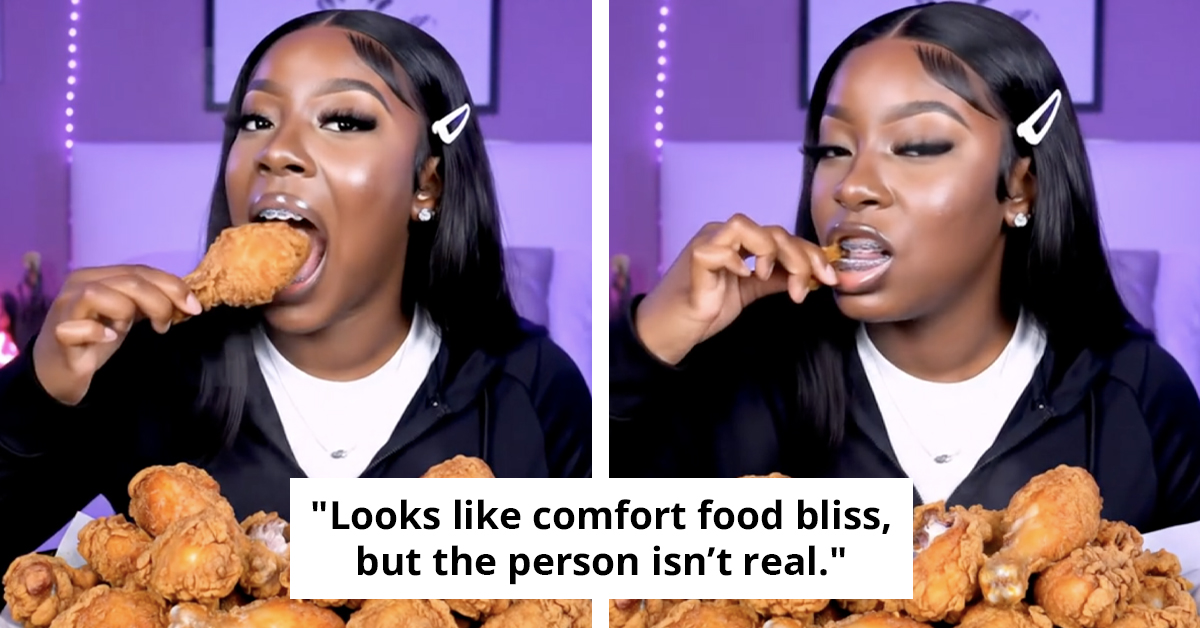
A viral mukbang clip is getting people to recoil, not because of the food, but because of what’s hiding underneath the “realistic” chewing. The comments are split between “this looks way too real” and “this is creepy as hell,” and the unease only grows when viewers start comparing details.
It’s an AI-made woman eating like it’s live content, and the realism is the whole problem. Fans are impressed by the tech, but others say the avatar feels stitched together from face filters, AI photo apps, and old stereotypes, including a Southern accent, specific facial features, and Black mannerisms. Then another fake mukbang surfaces, with a different AI woman eating a lobster claw, and suddenly it’s not just one spooky clip, it’s a pattern.
Here’s what happens when people notice the “only giveaway” and realize the avatar’s performance might be the point.
Social media users were quick to label the clip as 'spooky.'
Some are just blown away by the technology. One user wrote,
“AI is going to be crazy in a few years—bro, this looks real now.” Another added, “This is fascinating but also a bit unsettling. It really makes you wonder where the line between real and AI content will be in a year from now.”
It’s not just this one video either. Another mukbang clip, featuring a different fake woman eating an entire lobster claw, has also surfaced, and yes, people are weirded out.
Some viewers are digging a little deeper into the implications. One person pointed out that these videos might be the result of the countless face filters and AI photo apps that were trending not long ago:
“When everyone was using AI to make AI pictures of themselves on those apps… it was really collecting data, features, looks, etc., to do this with it.”
 TikTok
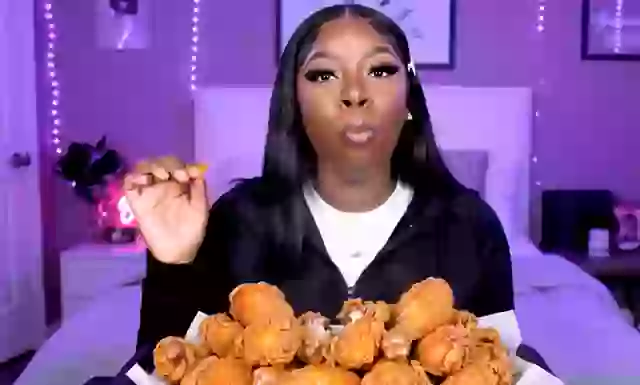
That’s when viewers watching the AI woman chomp through a whole chicken bone started calling it the only tell, and the rest of the realism started feeling less charming.
Some praised the realism, but others criticized the AI for racial stereotyping.
Others are focusing on the technical side. One commenter noted the only giveaway was when the AI woman appeared to eat a chicken bone whole.
“AI is getting WAY too good, bruh. The only tell is that she ate the bone,” they said.
But not everyone is just fascinated or amused—some are raising serious concerns, especially around the way the AI avatars are designed. In this case, many have pointed out that the fake woman appears to be modeled after a Black woman, complete with a Southern accent, certain facial features, and cultural mannerisms. And that’s where the mood in the comments shifts.
"AI woman ate a chicken bone."
Users slammed the AI video for mimicking Black stereotypes and called it racially exploitative.
One person tweeted:
“Y’all don’t find it weird that AI can replicate a damn lip combo and a Southern accent and Black mannerisms to make a fake Black person??? This s*** not spooky??” Another wrote: “Artificial blackface has bothered me for some time now, to be honest.”
Then came this:
“Something incredibly sinister is behind AI generating a woman to eat racially stereotyped foods and say things to trigger discourse and gender war fighting. Just evil, evil, evil.”
 X
X
Meanwhile, the same clip that had people marveling at “bro, this looks real now” also sparked calls of racial stereotyping, with commenters pointing to the Southern accent and Black mannerisms.
Gmail users should watch for the texting scam exploiting their phone numbers, just like experts warned in this alert.
Then the conversation got uglier when tweets and replies labeled it “artificial blackface,” like the internet was watching a fake Black person get performed for clicks.
This isn’t just about technology showing off anymore. People are starting to question why these AI avatars look the way they do, how they’re being used, and what messages they might be sending, whether on purpose or not. The boundary between creative innovation and unsettling imitation is fading fast.
What began as a viral mukbang video is now sparking a wider debate about ethics, identity, and where content is headed. And it seems this conversation is only getting started.
And just when people thought it was a one-off, another AI mukbang featuring a different fake woman eating a lobster claw dropped, making the whole thing feel coordinated instead of random.
The Psychological Impact of Mukbangs
In the context of mukbangs, viewers may feel pressured to replicate the excessive eating or feel guilt over their own eating habits.
Regularly practicing and focusing on one's personal journey can help individuals appreciate their unique relationship with food, rather than succumbing to societal pressures or trends.
The recent viral mukbang highlights the concerning trend of excessive consumption and its potential impact on viewers.
The family dinner of the internet is over, and nobody’s laughing at the “spooky” AI anymore.
Want more shocking “tech vs reality” tricks? See why a pilot swears soda cleans airplane windshields.

Damjan