Anna Wintour Steps Aside as Vogue’s Editor, Still Holds Reins
What’s Next for American Vogue and Fashion
Anna Wintour is stepping aside as Vogue’s editor, but the real twist is that she’s not exactly disappearing. Even while the title changes, her fingerprints have been all over how Vogue looks, sounds, and stays plugged into pop culture.
For years, she modernized the magazine in ways that felt almost rebellious. Gone were the tightly controlled studio portraits, replaced by covers that looked looser, more lived-in, and more like real life. And then came 1992, when she put Richard Gere on the cover next to Cindy Crawford, the first time a man had appeared on Vogue’s cover in its long history. Now, with Wintour moving into Condé Nast’s chief content officer role in 2020 and overseeing titles like Vanity Fair, GQ, Wired, and more, the question is what changes at the top, and what stays locked in.
Because even when she steps back from Vogue, the Vogue playbook might still run the whole show.
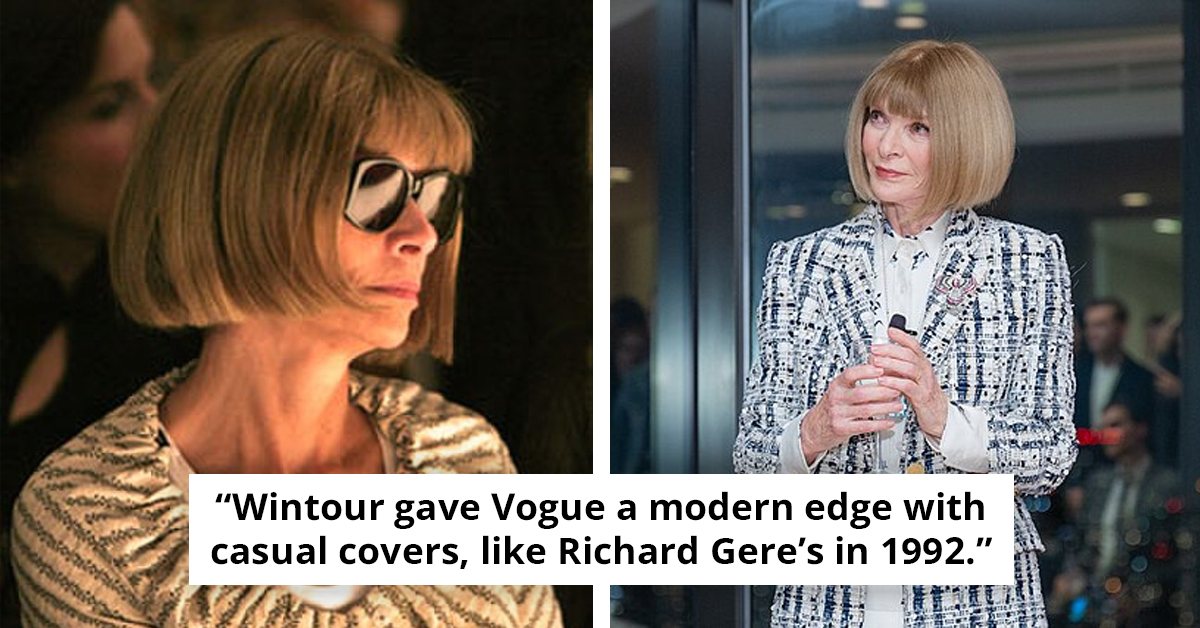
Wintour modernized Vogue with relaxed covers, like the 1992 issue featuring Richard Gere, keeping it culturally relevant.
She kept pushing the envelope throughout her time at the helm. Gone were the carefully controlled studio portraits that had dominated Vogue for decades. Instead, Wintour’s covers often featured models or celebrities photographed in more relaxed, natural settings.
This shift made the magazine feel fresher and more connected to real life, even as it covered the highest echelons of fashion. One of her most talked-about decisions came in 1992, when she put Richard Gere on the cover alongside Cindy Crawford, who was his wife at the time.
It was the first time in Vogue’s long history that a man appeared on the cover. Moves like that showed Wintour wasn’t interested in playing by outdated rules; she was more focused on reflecting what was exciting and relevant in culture.
 commons.wikimedia
That 1992 Richard Gere and Cindy Crawford cover is the kind of move that set the tone for everything Wintour later touched at Vogue.</p>
Though her name is synonymous with Vogue, Wintour’s influence grew beyond just one magazine. In 2020, she stepped into a new role as Condé Nast’s chief content officer, giving her oversight of all the company’s titles around the world.
That includes big names like Vanity Fair, GQ, Wired, Architectural Digest, Bon Appétit, and Condé Nast Traveler. Under her leadership, these publications often took bolder editorial approaches, leaning into stories that resonated with a broader, more modern audience.
Wintour’s decision to scale back isn’t simply a retirement. Instead, it’s part of a larger restructuring at Condé Nast, which has been adjusting its organization globally to adapt to the changing media landscape. Print media has faced significant challenges in recent years, from declining subscriptions to shifts in how people consume content.
Companies like Condé Nast are rethinking how they work to stay relevant and financially healthy, and changes at the very top are a part of that strategy.
But the story gets messier when you remember she didn’t just edit Vogue, she also became Condé Nast’s chief content officer in 2020, overseeing everything from Vanity Fair to Wired.</p>
A Shift in Leadership
Wintour's departure allows for new voices to emerge, which could reinvigorate American Vogue. Experts argue that introducing diverse perspectives can help the magazine resonate with a younger audience.
Wintour’s relaxed, real-life covers feel as wild as the bizarre couches and coffee tables in the most bizarre furniture designs ever spotted.
Anna Wintour’s exit signals big changes at Vogue and highlights fashion media’s slow move toward more diversity.
But no matter how expected these shifts may be, there’s no denying that Wintour stepping aside from American Vogue is a massive moment for the fashion industry. It opens the door for new voices and fresh ideas at a publication that has shaped conversations around style, culture, and celebrity for decades.
Whoever steps into the new head of editorial content role will inherit a platform that can still make or break careers and set the tone for fashion around the world. It also highlights just how much the industry has been evolving.
Two years ago, Chioma Nnadi became the first Black woman to lead British Vogue, following Edward Enninful’s historic run as the magazine’s first Black editor-in-chief. These recent appointments show how the fashion media is slowly becoming more diverse, even if there’s still a long way to go.
 commons.wikimedia
And as Condé Nast restructures to keep up with declining print subscriptions and shifting media habits, Wintour’s “scale back” looks less like retreat and more like a repositioning.</p>
For longtime followers of Vogue and Anna Wintour’s remarkable career, this leadership change marks a moment to look back on the magazine’s evolution over the last forty years. Under her guidance, Vogue transformed into a major force in fashion.
Now, as the magazine prepares for a new era, many are curious about the fresh perspective and direction the next editor will bring to this legendary publication.
So now that she’s stepping aside from the editor role, the real suspense is whether Vogue will keep that relaxed, culture-first energy or pivot hard under new leadership.</p>
Fashion industry veteran and cultural commentator Imran Amed highlights that Wintour's influence shaped fashion media significantly. However, he notes that the industry's landscape is shifting towards inclusivity and sustainability.
This transition suggests that future editors must prioritize these values to stay relevant.
Anna Wintour's decision to step down as editor-in-chief is undoubtedly a pivotal moment for American Vogue and the fashion industry at large. After nearly four decades under her leadership, this transition opens the door to an era that could embrace innovation and a broader range of voices. Wintour's legacy has been characterized by a strong vision, but the time has come for Vogue to explore new leadership that can align the magazine with the evolving values of today's society.
As the landscape of fashion shifts, the opportunity for Vogue to cultivate a culture of creativity and inclusiveness is paramount. This change allows the publication to redefine its mission, ensuring that it resonates with a more diverse and contemporary audience. The potential for fresh ideas and perspectives invites a promising future for Vogue as it navigates this significant transformation.
Vogue might be getting a new editor, but Wintour’s taste is still everywhere.
For another unexpected blowup, see who got stuck paying after surprise guests crashed the beach house trip.

Damjan