
Why Archaeologists Refuse to Open the Tomb of China’s First Emperor
“Craftsmen were ordered to make crossbows and arrows primed to shoot at anyone who enters the tomb.”
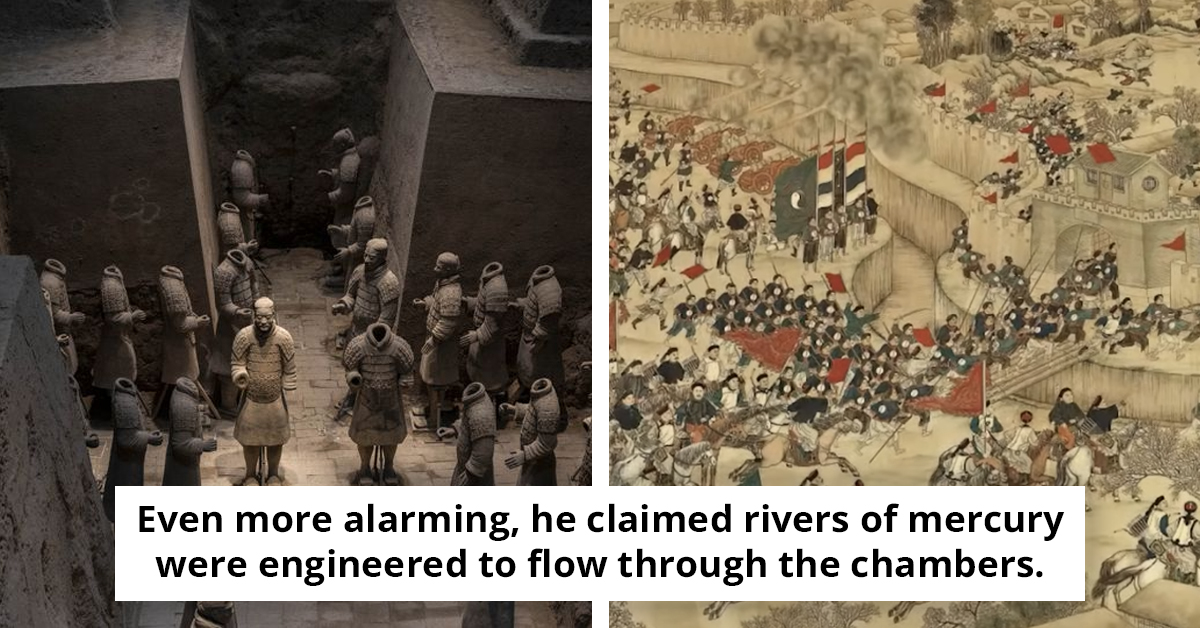
Archaeologists keep walking past the biggest “open me” button in Chinese history, and it’s not because they forgot it exists. Qin Shi Huang’s tomb has been sealed since antiquity, and the reason is as spooky as it is specific: it was allegedly built like a fortress for the afterlife, complete with deadly defenses for anyone who dares to enter.
The complication is that the warnings come from Sima Qian, the historian who wrote about the tomb about a century after Qin Shi Huang died. In his account, the mausoleum wasn’t just packed with treasures, it was engineered for violence, with crossbows primed to shoot intruders and mechanical rivers of mercury meant to mimic the Yangtze and Yellow Rivers.
And the creepiest part is that modern soil samples near the site reportedly show unusually high mercury, turning the legend into something harder to dismiss.
The mausoleum was designed not just as a palace for the afterlife, but as a fortress against intruders.
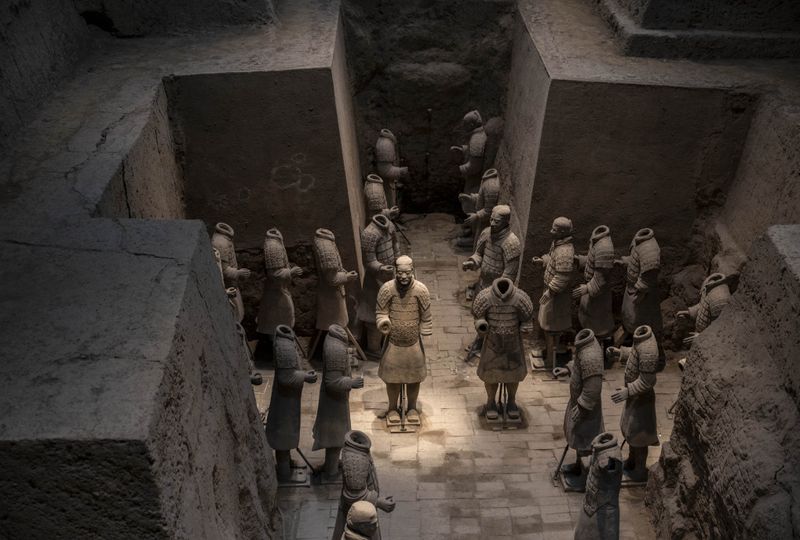 Pexels
Warnings from ancient records
The main reason lies in warnings written by Sima Qian, a Chinese historian who chronicled the tomb around a century after Qin Shi Huang’s death.
“Palaces and scenic towers for a hundred officials were constructed, and the tomb was filled with rare artifacts and wonderful treasures,” Sima Qian wrote. He also described deadly traps: “Craftsmen were ordered to make crossbows and arrows primed to shoot at anyone who enters the tomb.”
Even more alarming was his claim that rivers of mercury were engineered to flow mechanically through the chambers, simulating China’s great waterways, including the Yangtze and Yellow Rivers.
That’s when the story turns from “mystery tomb” into “do not enter,” thanks to Sima Qian’s description of crossbows and arrows waiting for intruders.
The enduring mystery of Qin Shi Huang's unopened tomb captivates our collective imagination, tapping into a fundamental human instinct for exploration and discovery. This intrigue is not merely a reflection of our desire for novelty but also a representation of the deeper psychological drivers behind human curiosity. The concept of the 'information gap' plays a crucial role here; the allure of the unknown propels us toward seeking answers. The ongoing decision by archaeologists to keep the tomb sealed adds layers to this mystery, creating a compelling narrative that fuels public interest and debate. The potential knowledge locked within those ancient walls beckons us, suggesting that the quest for understanding is as valuable as the discoveries themselves. The tomb's preservation in its current state raises profound questions about the balance between archaeological exploration and the respect for historical sanctity.
Even more alarming was his claim that rivers of mercury were engineered to flow mechanically through the chambers
Then comes the mercury claim, where the tomb supposedly had moving rivers built to imitate China’s real waterways.
The mercury problem
Modern science appears to support at least part of Sima Qian’s account. Soil samples taken near the tomb have revealed unusually high levels of mercury.
A 2020 study noted that “highly volatile mercury may be escaping through cracks that developed in the structure over time,” adding weight to the idea that the subterranean palace was indeed flooded with the toxic metal.
The possibility of lethal traps, combined with the risk of exposure to mercury vapor, makes direct excavation hazardous. Even if archaeologists managed to neutralize these threats, opening the tomb could cause irreversible damage to whatever treasures or human remains lie inside.
This “nobody’s getting in” vibe is wild, just like the mom who called her daughter “a cow” over pink bedding in a purple room.
The dilemma of preservation
Unlike the Terracotta Army, which has been painstakingly restored after centuries underground, the contents of the main burial chamber are sealed in a highly delicate microenvironment. Breaking into it could cause artifacts to collapse, corrode, or disintegrate upon contact with air and light.
For this reason, archaeologists have turned to non-invasive methods such as ground-penetrating radar and remote sensing to map the tomb. So far, these efforts have revealed the sheer scale of the mausoleum complex but have stopped short of peering inside the central chamber.
After that, the whole thing gets even messier because soil near the tomb reportedly shows unusually high mercury levels, which makes the warning feel less like myth.
The mystery continues
The tomb of Qin Shi Huang remains one of archaeology’s greatest mysteries. Is it truly filled with priceless treasures and ingenious traps, or have centuries of legend exaggerated what lies within? For now, the answers remain locked underground.
The reluctance of archaeologists to open the tomb can be understood through the lens of risk assessment, a psychological process we all engage in when making decisions. We weigh the potential benefits against the risks, often preferring to maintain the status quo if the potential losses seem too great (Weber et al., 2002). In this case, the potential destruction of invaluable historical artifacts and the triggering of traps outweigh the benefit of satisfying our curiosity. This aligns with the Prospect Theory, which suggests that losses loom larger than gains in our decision-making process.
So every time archaeologists keep the tomb sealed, the public gets stuck with the same question: what else is inside, and what might still be dangerous?
Human Response to Authority and Power
The reverence and caution with which we approach the resting place of Qin Shi Huang may also be influenced by our psychological response to authority and power. Past research, such as Milgram's obedience experiment (Milgram, 1963), has shown that people often show deference to authority figures, even long after they've passed away. This respect for authority can extend to places or objects associated with these figures, like Qin Shi Huang's tomb.
The information gap theory explains the intense curiosity surrounding the tomb, as the secrets it holds remain largely unknown after 2,200 years. However, this curiosity is tempered by a rigorous risk assessment, acknowledging the potential dangers of excavation, including damage to artifacts and the tomb’s structural integrity. Furthermore, the historical significance of the site, representing the power of China’s first emperor, invokes a deep respect for what lies beneath the surface. This intricate balance of curiosity and caution ultimately shapes the ongoing decision to leave the tomb undisturbed for the foreseeable future.
Nobody wants to be the person who walks into a tomb built to shoot first.
After that “fortress against intruders” mindset, see why someone called out their parents for discipline and responsibility.

Damjan