Flat Earther Who Dreams Of Moon Mission Says The Globe Is Fake
What the Flat Earth Model Actually Looks Like
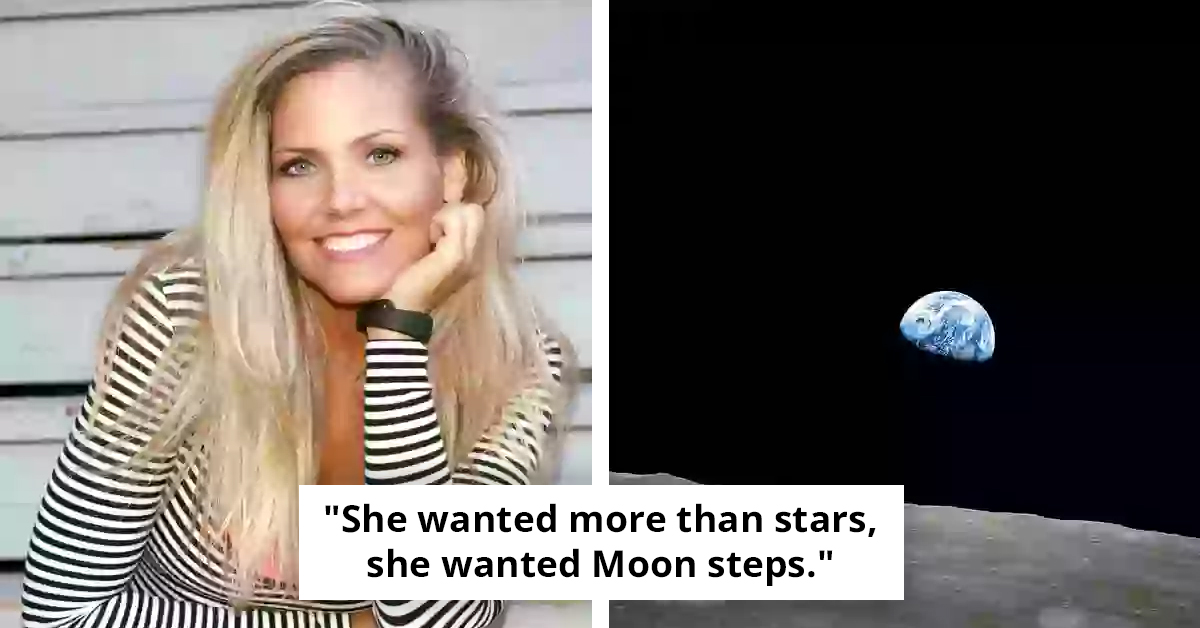
A 28-year-old woman refused to stop talking about the shape of the world. Shelley Lewis, who openly identifies as a Flat Earther, says her belief did not come from a random late-night video, it started with a conversation that stuck. A pilot friend pitched her the flat Earth idea, and suddenly her curiosity had a target.
From there, Shelley went full detective mode. She interviewed pilots, engineers, and weapons experts, chasing answers like every question was a missing piece of a puzzle. She even maps the Flat Earth model like a giant disc or clock face, complete with a dome on pillars and water around it, plus a spiritual layer she calls “Biblical Flat Earther” while insisting it is still science-based.
And once you hear how she connects Biblical imagery to moon dreams, you realize this is less about a shape and more about a whole worldview colliding with everything everyone else takes for granted.
Shelley Lewis openly identifies as a Flat Earther.
Her shift in perspective started with a conversation. A pilot friend introduced her to the idea of a flat Earth, and curiosity took over. Shelley began conducting her research, interviewing not just pilots but also engineers and weapons experts. The more she asked questions, the more convinced she became.
“All of this was pointing to a flat Earth,” she said.
So what does that look like, exactly? Shelley describes the Flat Earth model as something akin to a giant disc or clock face. Instead of orbiting in space, the Earth is thought to be a self-contained system.
“People think Flat Earthers believe you’ll fall off the edge, but no. It could be an infinite plane or a contained system with a dome.”
That dome, she explains, rests on pillars and is surrounded by water. She also refers to Biblical imagery, mentioning concepts like “the throne room of God” and “The River of Life.” While her interpretation is spiritual, she insists it’s also grounded in what she calls scientific questioning.
“I’m a Biblical Flat Earther,” she said, “but I’m still science-based.”
 Shelley Lewis
Flat Earth
Of course, mainstream science strongly disagrees. The idea that Earth is round dates back over 2,000 years to the Ancient Greeks.
Eratosthenes calculated the planet’s circumference using shadows and simple math. Later thinkers in India, the Islamic world, and Europe built on this, and by the Middle Ages, the spherical Earth was common knowledge.
The first known globe dates back to 1492. Then came telescopes, satellites, astronauts, moon landings, and GPS. Flat Earth beliefs had largely faded until the 19th century, when a few groups revived them.
The International Flat Earth Society was founded in 1956, and when its founder, Samuel Shenton, was shown a photo of Earth from space, he dismissed it.
“It’s easy to see how a photo like this could fool the untrained eye,” he said.
 commons.wikimedia.org
Taken from lunar orbit on December 24, 1968, astronaut William Anders captured the iconic ‘Earthrise’
You’d think that the space race would have put an end to all of this, but the rise of social media has done the opposite. Online platforms have helped fringe theories spread faster than ever and find audiences willing to listen.
Shelley says she’s seen the reactions.
“There were a lot of raised eyebrows, like, what the hell? Is she OK? Do we need to have a welfare check on this girl?”
Her beliefs have even strained some personal relationships. Her parents remain supportive, she says, but one of her in-laws cut ties completely.
Still, she believes attitudes are slowly shifting.
“It’s still a fringe topic,” she said, “but there are a lot of people who are questioning it as well. I think people are more open to it, but it is controversial.”
Shelley also pushes back on criticism that Flat Earthers are anti-science.
“You’re going against science, you’re going against Newton and Kepler and all these big scientists,” she said. “But isn’t that what science is? Aren’t we allowed to question things? When we find new information, shouldn’t we investigate it?”
 Nasa
Nasa
That pilot friend’s chat with Shelley was the spark, and her new round of interviews quickly turned curiosity into a full-on obsession.
When Shelley explains the dome, the pillars, and the “throne room of God” imagery, it gets messy fast because it mixes spiritual visuals with claims she calls “scientific questioning.”
This is similar to the cousin showdown over household chores, where one person asked them to move out.
When confronted with overwhelming evidence contradicting their views, many individuals experience discomfort, leading them to double down on their beliefs rather than reconsidering them.
This phenomenon is often explained as a protective mechanism to maintain one's self-identity and worldview.
The conflict gets even sharper when you remember how the Ancient Greeks, Eratosthenes, and later globes, telescopes, satellites, astronauts, and GPS all point the other way.
Addressing the emotional factors driving Flat Earth beliefs is crucial for effective communication.
And it doesn’t help that Samuel Shenton dismissed a photo of Earth from space as “easy to fool the untrained eye,” which is the kind of argument Shelley keeps banking on.
Shelley’s story shows how personal experiences and online influence can shape someone’s view in today’s flood of information. With so much content out there, ranging from solid science to wild conspiracy theories, it’s often hard to tell where facts stop and personal beliefs begin.
For Shelley, the flat Earth idea isn’t just a theory; it’s become a key part of how she sees the world. Whether others disagree or call it wrong, for her, it feels like the truth, and that’s usually enough to stick with.
The piece highlights the importance of empathetic communication when engaging with Flat Earthers, suggesting that fostering a sense of connection could be a way to encourage individuals to reevaluate their convictions. This approach is vital in a climate where divisive rhetoric often prevails.
The article underscores the necessity of nurturing an environment conducive to curiosity and critical thinking. By engaging with those who hold contrary beliefs, there is potential to create educational opportunities that promote understanding rather than further entrenchment in opposing views. The conversation should shift from confrontation to collaboration, allowing for a constructive exchange that could ultimately lead to greater enlightenment on both sides.
Shelley’s moon mission dream is fueled by a globe she refuses to accept, and the gap between those two worlds is where the story gets loud.
For more honesty vs loyalty drama, read whether I should reveal my best friend’s crush.

Damjan