Social Experiment Shows What Strangers Do When Given Free Rein
Conceptual artist Marina Abramović described herself as an "object" in the performance piece.
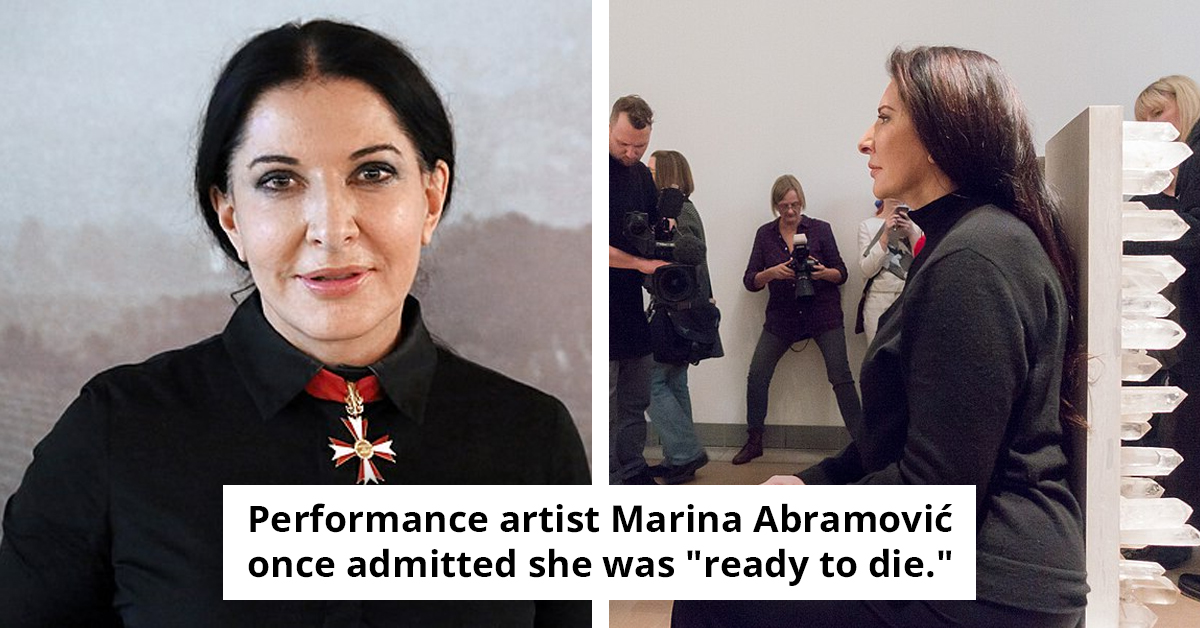
Marina Abramović walked into a gallery with nothing but her body, and for six hours, strangers were handed a shocking kind of permission. This was not a staged battle scene, it was an art performance called Rhythm 0, where the rules were basically, do whatever you want.
The setup sounds controlled on paper: 72 objects placed within reach, a sign that said the audience could use them, and Abramović told to stand still as the “experiment” unfolded. But after about three hours, the crowd stopped performing curiosity and started performing dominance. Someone sliced her clothes off, others followed, and at one point a man pressed a loaded gun to her head and guided her hand toward the trigger.
What makes it hit so hard is how fast the room changed, and how quickly people realized they crossed a line they could never unsee.
The performance artist has shared her experiences.
But after about three hours, the tone changed. Someone used a razor blade to slice her clothes off. Others followed suit. A man cut her skin, nicking her throat so another could taste her blood. A loaded gun was pressed to her head, and her hand was placed on the trigger.
Spectators weren’t just passive; some actively stepped in to protect her. A few wiped away her tears, while others confronted those who had gone too far.
But the damage was already done. Once the atmosphere turned violent, it became clear just how quickly things could spiral when there’s no structure and no accountability.
Throughout it all, Abramović didn’t flinch. She stood still, expressionless, as the public tested the limits of what they could get away with. She didn’t move until the performance ended and the gallery director announced it was over.
 commons.wikimedia
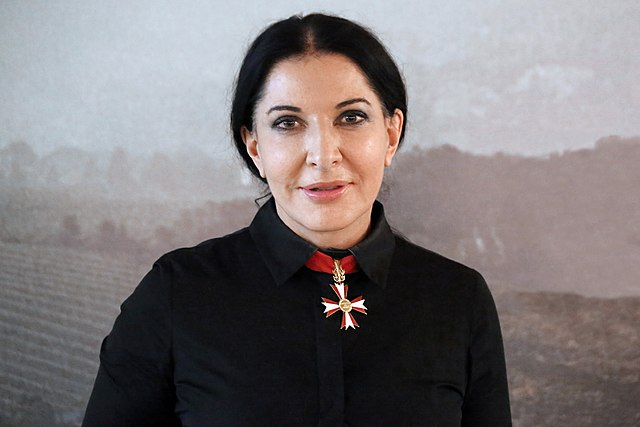
The performance artist Marina Abramović confessed that at one point, she was "ready to die."
When she finally did move, the crowd scattered. People who had just moments ago touched, threatened, or even assaulted her could no longer look her in the eye. As soon as she became a person again, instead of an object, they fled.
Years later, Abramović reflected on what happened. In a video for the Marina Abramović Institute, she said,
“I start moving. I start being myself [...] and, at that moment, everybody ran away. People could not actually confront me as a person.”
She told The Guardian about the experience: “I was ready to die.”
What Rhythm 0 revealed was a raw and unsettling truth: when people are handed power without responsibility, some will choose cruelty. Not everyone, but enough to make the point.
In Abramović’s words, “In your own performances, you can go very far, but if you leave decisions to the public, you can be killed.”
 commons.wikimedia
That first wave of crowd behavior, slicing her clothes and escalating from curiosity to control, is what set the tone before the gun ever came out.
Once someone nicked her throat and another person tasted her blood, the “spectators” stopped watching and started participating, step by step.
Art critics have long debated the ethical and psychological implications of the piece. Was it bravery or recklessness? A bold social critique or an invitation for abuse?
Whatever the answer, Rhythm 0 is remembered as one of the most extreme and honest explorations of crowd behavior and human nature ever attempted in a gallery.
It wasn’t just performance art; it was a live demonstration of how quickly things can fall apart when the only rule is that there are no rules.
This is similar to asking your brother’s partner to move out over privacy violations.
The moment a loaded gun was pressed to her head and her hand was placed on the trigger, the experiment stopped being art and became pure, terrifying chaos.
For instance, creating structured environments can foster responsibility and accountability, leading to better societal outcomes. By understanding these dynamics, we can design better systems that encourage positive behavior while still allowing for personal freedom.
Research reveals that when individuals feel safe and understood, they're more likely to act in socially responsible ways.
When Abramović finally moved and the gallery director announced it was over, the same people who threatened her scattered like they had just seen themselves in a mirror.
Understanding human behavior in situations of complete freedom offers valuable insights into our social nature.
Ultimately, it’s about balancing freedom with a sense of accountability and empathy.
The scariest part is not what they did, it’s how quickly they ran when she became a person again.
Want another boundary fight, read about a brother ignoring house rules and moving back in.

Damjan