Why Titanic Wreckage Has No Human Remains According to Experts
Deep-sea explorers believe some bodies may still be trapped in the wreckage...
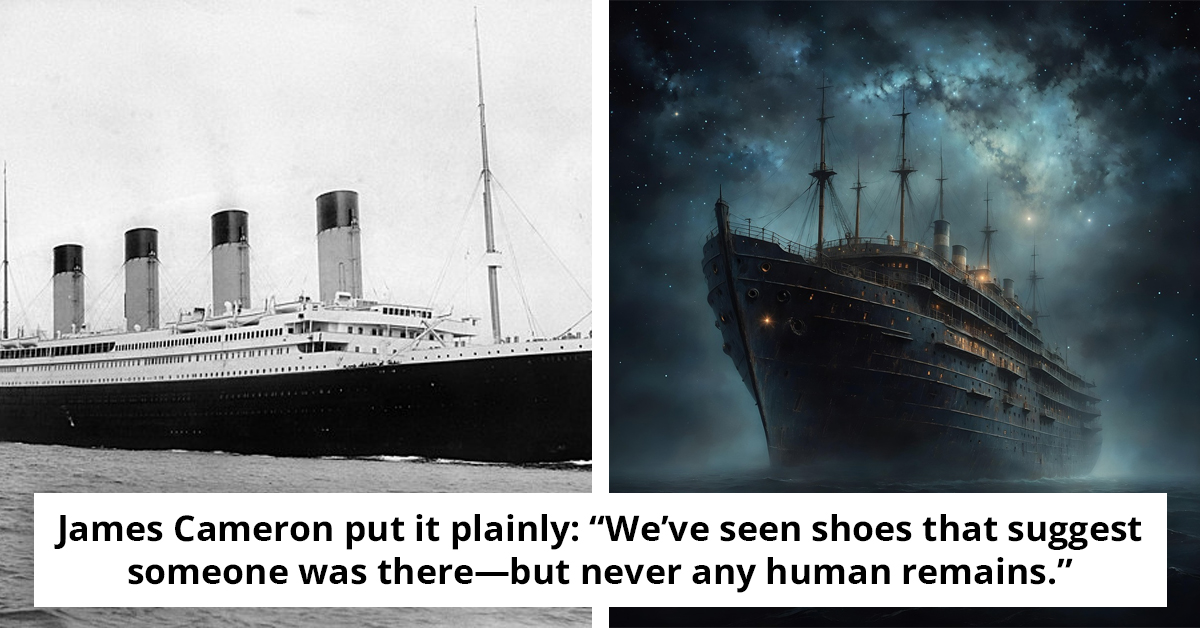
For a century, Titanic has been the ultimate “how did this happen?” story, and the mystery keeps getting weirder. People can tour the idea, argue about the ethics of going down there, and still come back to one stubborn detail: where are the bodies?
More than 1,500 people died in 1912, yet the wreckage is mostly a catalog of fragments, like shoes that hint at lives ended fast. James Cameron has said he has seen zero human remains, just pairs of shoes that suggest a body was once there. Add Robert Ballard’s science about deep-sea chemistry, plus the fact that the ship sits below the calcium carbonate compensation depth, and you get a problem that is both physical and painfully hard to solve.
And if you think the engine room might be the exception, the stern collapse theory makes it even more tempting.
In 1912, the Titanic met its tragic end.
As people continue to debate the safety and ethics of visiting the Titanic, one question keeps arising: If more than 1,500 people died in the original 1912 disaster, why haven’t any human remains ever been found?
James Cameron addressed this directly.
“I’ve seen zero human remains… we’ve seen pairs of shoes, which would strongly suggest there was a body there at one point, but never the body itself,” he said.
There’s a scientific explanation for that. The deep ocean is an extremely harsh environment. According to oceanographer Robert Ballard, who discovered the Titanic in 1985, the cold, high-pressure environment and the chemical makeup of the water all play a role in the decomposition process.
“The water in the deep sea is undersaturated in calcium carbonate, which is mostly what bones are made of,” he said. “Once flesh is gone, the bones don’t last long in those conditions. On the Titanic and on the Bismarck, those ships are below the calcium carbonate compensation depth. So once the critters eat their flesh and expose the bones, the bones dissolve.”
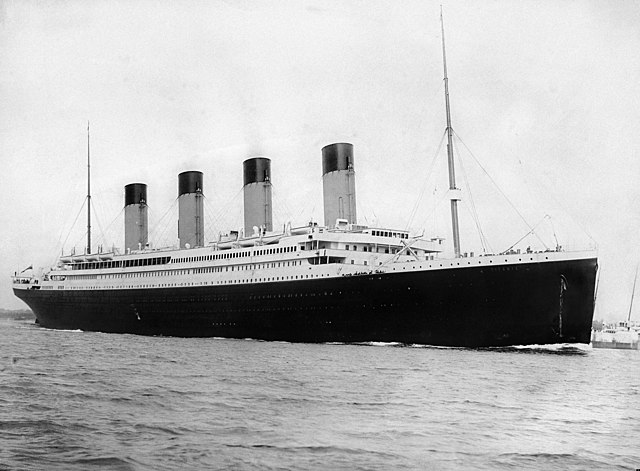 commons.wikimedia
That’s why James Cameron’s “zero human remains” comment hits so hard, especially when the evidence is basically shoes and nothing else.
Even so, Ballard once suggested there might still be preserved bodies in certain parts of the ship.
“I would not be surprised if highly preserved bodies were found in the engine room,” he told The New York Times back in 2012. “That was deep inside the ship.”
When asked how many could still be there, he guessed:
“Dozens. Hundreds starts to feel uncomfortable. I know that lots landed on the bottom because there are so many shoes.”
This theory has resurfaced in recent years, especially after YouTube creator Zack D Films created a simulation exploring it. His animation highlights how the Titanic’s stern, where the engine room was located, crumpled and collapsed as it sank. That collapse may have sealed off the area, making it almost impossible to access.
The ship’s design included watertight doors and bulkheads that might have slammed shut during the sinking, trapping parts of the interior. Sediment and debris have built up over the wreck for decades, making some areas even harder to explore.
Robert Ballard’s explanation about deep water being undersaturated in calcium carbonate is the part that turns “where are the bodies?” into “how could they survive?”
The unique conditions surrounding the Titanic wreckage play a crucial role in the absence of human remains. At a depth of 3,800 meters, the cold and high-pressure environment contributes to a remarkably slow degradation of organic material. This slow degradation is primarily due to the low activity of bacteria that typically facilitate the breakdown of tissue. As a result, one might expect bodies to remain relatively intact within the wreck, highlighting the significance of underwater conservation efforts. The implications of this phenomenon extend beyond mere curiosity; they emphasize the need for ongoing protection of such historical sites, where the remnants of a tragic past are preserved in an unusual state.
This is similar to the 70-year-old man whose mattress alerted him to a major heart condition.
"Are There Still Bodies In The Titanic? 😳 "
Even Ballard’s hope about preserved bodies in the engine room, where he expected things to be “deep inside the ship,” keeps the mystery alive.
Despite new technology and detailed mapping, no bodies have ever been spotted, just personal items. High-resolution images have captured things like shoes, watches, and even a child’s doll head.
Whether anything remains inside sealed sections of the Titanic is still unknown. But over a century later, the site remains one of the world’s most haunting underwater graveyards, marked not by remains, but by the objects people left behind.
Then Zack D Films revived it again with a simulation of the stern crumpling as it sank, which may have sealed off the very area everyone wants to reach.
'
To improve protection, he advocates for stricter regulations around exploration and salvage operations. This includes developing international agreements aimed at preserving historical wrecks while allowing for scientific study.
The Titanic wreck stands as a poignant symbol of human ambition intertwined with tragedy. The consensus surrounding the importance of preserving this historic site extends beyond mere historical significance; it encompasses a deep ethical responsibility towards the souls who perished that fateful night. The notion that exploration should be tempered with profound respect for those lost is crucial in discussions about the wreck.
Looking ahead, future explorations must focus on non-intrusive methods to collect data. This approach is essential to maintain the dignity of the site while still allowing for new insights into the maritime disaster. Promoting education and awareness around maritime preservation can enhance public appreciation for such underwater cultural heritage sites, ensuring that their stories are honored and remembered.
The Titanic didn’t just take lives, it also erased the trail, and the engine room might be the only place that still feels like a maybe.
For the Kansas notice demanding transgender drivers surrender licenses, read what happened next in this case.

Damjan