Quentin Tarantino Reveals the Real Reason He Walked Away From His 10th and “Final” Film
The director’s decision to halt The Movie Critic raises the question: Is Tarantino truly done with filmmaking?
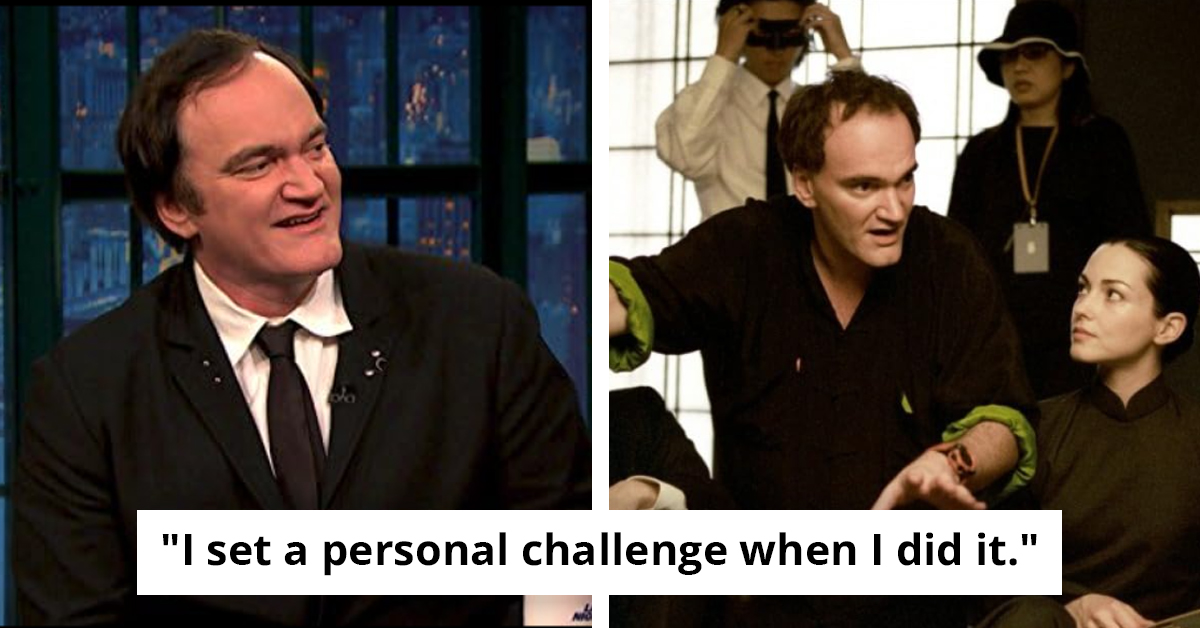
Quentin Tarantino didn’t just cancel his “final” 10th film, The Movie Critic, he basically torpedoed the whole premise with one brutally simple question: can you make the most boring job on Earth feel like Tarantino?
Here’s the messy part, Tarantino set himself a dare, then tried to pull off the impossible by turning a movie critic into something you’d actually want to watch. The title alone was a red flag, and he called out the idea like it was a bad joke that somehow kept getting greenlit. On top of that, the project was supposed to be a spiritual sequel to Once Upon a Time… in Hollywood, set in the same town, but with no crossover characters, which only fueled even more speculation.
Now the real mystery is why he walked away before the dare could even fully land.
Quentin Tarantino has explained why he decided to cancel the film
 IMDB
IMDB
The “crazy” reason was tied to a personal dare he set for himself. "There was a challenge that I gave to myself when I did it. Can I take the most boring profession in the world and make it an interesting movie? Every Tarantino title promises so much, except The Movie Critic.
"Who wants to see a TV show about a f****** movie critic? Who wants to see a movie called The Movie Critic? If I can actually make a movie or a TV show about somebody who watches movies interesting, that is an accomplishment."
That “most boring profession” dare is the whole reason <em>The Movie Critic</em> became a problem in the first place.
Moreover, the study also suggests that people who have achieved a high level of success in their careers, like Tarantino, often seek new challenges or want to explore different aspects of their identities. It's not uncommon for them to move on from their successful careers to pursue something they're more passionate about or have always wanted to do. This could potentially explain Tarantino's decision to stop after his 10th film.
The director said the movie was a 'spiritual sequel to Once Upon a Time… in Hollywood'
 IMDB
IMDB
And when Tarantino called the film a spiritual sequel to <em>Once Upon a Time… in Hollywood</em> with zero character crossovers, the Brad Pitt chatter went nuclear.
A “Spiritual Sequel” That Never Was
While Tarantino ultimately scrapped the film, he revealed it was envisioned as a companion piece to Once Upon a Time in Hollywood. "It’s a spiritual sequel to Once Upon a Time… in Hollywood in so far as they take place in the same world and they take place in the same town. But there were no crossover characters."
Fans speculated that Brad Pitt might reprise his Oscar-winning role as stuntman Cliff Booth, but Tarantino dismissed the chatter outright. "That’s all a bunch of bull****. That never was the case ever, ever, ever," he said.
And speaking of film frustration, Rowan Atkinson reveals why he wasted time wrapping the Necklace in Love Actually.
The director’s decision to halt The Movie Critic raises the question: is Tarantino truly done with filmmaking?
 IMDB
IMDB
He shut down the Cliff Booth rumors fast, but the bigger question lingered, was he actually done making movies or just done with that one?
Quentin Tarantino's choice to walk away from his anticipated tenth film, The Movie Critic, marks a significant moment in his illustrious career. This decision can be interpreted as a form of closure, reflecting not just the end of a chapter but also a deeper introspection about his artistic journey. As Tarantino has navigated the landscape of Hollywood, known for his bold storytelling and signature style, stepping back appears to signify a desire to redefine his relationship with filmmaking. It suggests that he may be seeking new avenues that align more closely with his evolving creative identity. This moment of departure indicates a pivotal transition, one that many artists face when they reach a milestone and reconsider their purpose within their craft.
A Story That Excited Him—But Only on Paper
Even though Tarantino loved writing the script, he admitted his enthusiasm faded when it came to actually bringing it to life. "I really, really like The Movie Critic," he confessed. "I was so excited about the writing, but I wasn’t really that excited about dramatizing what I wrote once we were in pre-production."
This candid admission sheds light on why the project fizzled. For Tarantino, crafting the story was creatively fulfilling, but the prospect of filming it didn’t spark the same fire that fueled his earlier movies.
So when he framed his stop at 10 films as closure, it made the “final” label feel less like an ending and more like a pause he might regret.
What Comes Next for Tarantino?
The director’s decision to halt The Movie Critic raises the question: Is Tarantino truly done with filmmaking? While he has stated for years that he would retire after 10 films, his comments suggest he may still leave the door open. With the script already written, fans may wonder if The Movie Critic could someday reemerge in another form—perhaps as a TV series or even a novel.
For now, Tarantino seems at peace with shelving the project. His legacy is already cemented in film history, and if his career truly ends at nine features, his final completed work, Once Upon a Time in Hollywood, stands as a fitting farewell to the world he’s spent decades reimagining.
Creativity and Psychological Well-being
Another psychological perspective to consider is the link between creativity and psychological well-being. Hence, Tarantino's decision to step away from the filmmaking industry doesn't necessarily mean he's done with creativity. Instead, he may be choosing to channel his creative energies elsewhere, possibly in a way that brings him greater joy and satisfaction.
Tarantino has always been a figure who prioritizes artistic integrity and personal fulfillment in his work.
Nobody wants to see a movie critic, but Tarantino still couldn’t make that mistake feel like art.
Still arguing about Hawkins closure? Read why Stranger Things ended after nine years split fans.

Damjan