
A Closer Look At The New 'Language' Born From Culture, Community, And Language Blending
Why this emerging dialect deserves respect, not stigma

Miami has a way of making language feel like it belongs to you. Spanish-influenced phrases now show up so naturally in everyday English that locals barely clock them as “different,” while outsiders swear they sound off, awkward, or just plain wrong.
This is where it gets complicated. The shift is not stuck in bilingual homes or among brand-new arrivals. Carter points out that second-generation Cuban Americans, and other Miami kids who learned English from birth, also use these translated phrases without thinking, because they grew up hearing them everywhere.
In 2022, Carter and Kristen D’Allessandro Merii put that assumption to the test with 33 Miami residents, and the results exposed a split that is basically impossible to unhear once you notice it.
Spanish-influenced phrases now come naturally to Miami-born English speakers.
What makes this development especially interesting to linguists is that it isn’t limited to bilingual speakers or recent arrivals. These expressions have spread to people who grew up speaking English as their first language.
Carter notes that many second-generation children who learned English from birth also use these translated phrases naturally in their everyday speech. This shows the depth of Spanish influence in Miami’s cultural landscape and the way languages blend within community life.
 Unsplash
That’s why a Miami-born kid who learned English from day one can still say the translated phrase like it’s always been part of the script.
In 2022, Carter and fellow linguist Kristen D’Allessandro Merii conducted a study to better document these Spanish-origin calques. Their research involved 33 Miami residents, including first- and second-generation Cuban Americans as well as participants with roots in other Hispanic backgrounds.
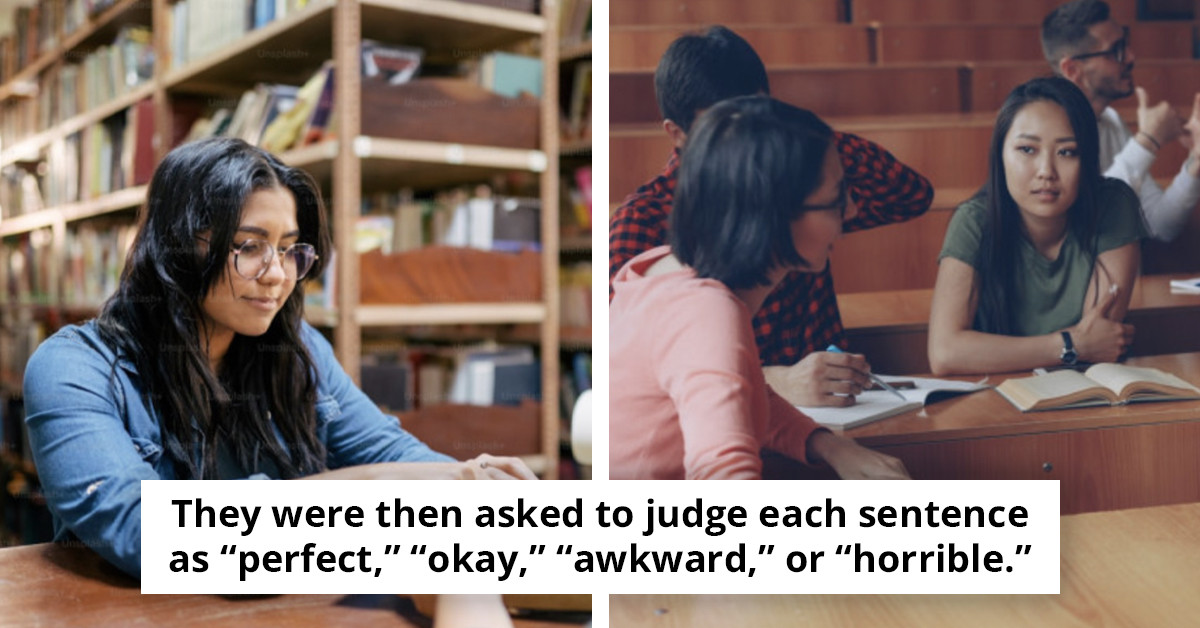
Each person was given more than 50 sentences that showcased Miami’s unique expressions. They were then asked to evaluate each sentence and decide whether it sounded “perfect,” “okay,” “awkward,” or “horrible.”
Linguistic Evolution Insights
Such linguistic evolution deserves appreciation rather than stigma. The blending of languages reflects the dynamic nature of human communication and social cohesion, showcasing how communities adapt their language to better express their unique experiences.
Miami locals hear normal speech, while outsiders hear a dialect that sounds completely unfamiliar.
The results revealed a strong split in perception. For Miami residents, most of the sentences sounded entirely normal. For people from outside the region, however, many of the same phrases felt unfamiliar or even incorrect.
This contrast highlights how dialects emerge: small shifts accumulate within a community until the speech patterns form a recognizable system. To an outsider, those differences may seem unusual, but for the people within the community, they represent everyday communication.
 Unsplash
Then Carter and Kristen D’Allessandro Merii handed 33 residents more than 50 sentence examples and watched the reactions get very different, very fast.
And if you’re still processing loss, remembering the famous figures who died in 2025 hits hard.
For Miami residents, the sentences landed as “perfect” or “okay,” but for people from outside the region, the same lines sounded unfamiliar, even “horrible.”
Carter emphasizes that language varieties like Miami English deserve respect rather than judgment. Dialects shaped by marginalized communities are often viewed as less legitimate, even though they are fully formed linguistic systems with their own internal rules.
They are the languages people grow up hearing at home, use with friends, and associate with major life experiences. Treating those forms as inferior sends a message that the identities attached to them are inferior as well.
As Miami English evolves, researchers hope people grow more welcoming toward it and toward every dialect. The way we speak is shaped by identity, culture, and change, and it’s always in motion.
No one should feel pushed to give up their natural voice just to match someone else’s idea of correctness. Everyone deserves the space to speak in a way that reflects who they are.
By the time you reach Carter’s point about small shifts stacking up into a recognizable system, Miami’s everyday speech stops looking accidental and starts looking built.</p>
To improve acceptance of new dialects, educators can incorporate multilingual education and promote the value of linguistic diversity in classrooms. This approach not only enriches students' learning experiences but also prepares them to engage respectfully with different communities in an increasingly interconnected world.
The development of new dialects, particularly the unique English spoken in South Florida, serves as a testament to the dynamic relationship between culture and language. This linguistic evolution not only mirrors the diverse histories of the region's communities but also highlights the ongoing societal transformations that shape how people communicate. Rather than viewing these shifts as mere curiosities, it is essential to recognize their significance and embrace them as part of a broader narrative of identity and expression.
To foster a more inclusive environment, it is crucial for educators, media representatives, and community leaders to collaborate in raising awareness and appreciation for linguistic diversity. By promoting understanding and valuing all forms of communication, we can cultivate a culture that encourages mutual respect and bridges the gaps between different communities.
The family dinner did not end well, because one group heard “normal” and the other heard “wrong.”
Wait until you see how absurd everyday life gets in UK daily life photos.
