
Scientists Reveal Incredible Glowing Organism In The Ocean That You Can See From Space
Fluorescent glow plays a vital role in helping ocean life thrive.

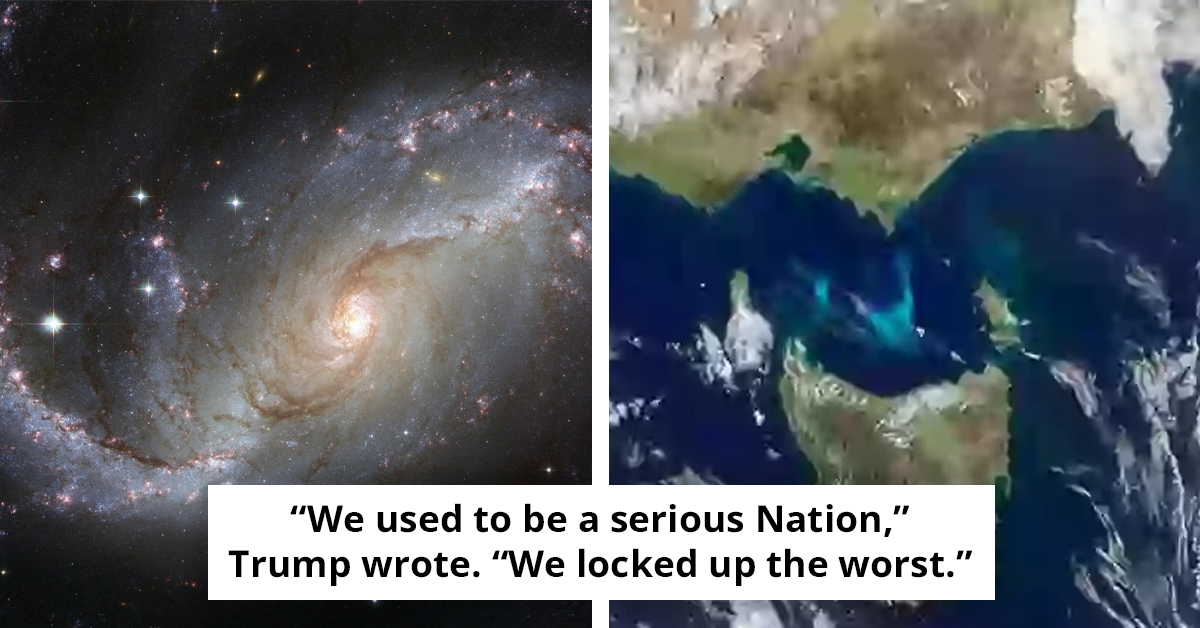
Satellite images showing a glowing ocean streak might sound like sci-fi, but this one is real, and it’s happening off Australia’s southeast coast. Between Tasmania and the shelf break, phytoplankton blooms are turning the water into something you can almost read like a map.
Jochen Kaempf points out that the green filament is a phytoplankton bloom running along a shelf break about 150 meters deep, while the bluer signal could be shallow sediment or a different species entirely. That’s where it gets tricky, because what looks like one continuous glow might actually be multiple things happening at once.
And once you zoom out, it’s not just pretty from space, it’s feeding blue whales and an entire buffet of marine life.
Phytoplankton are swirling in the waters between Tasmania and Australia's southeast coast.
Experts say these kinds of blooms aren’t unusual for this region, but the scale and visibility from space make it something worth investigating. Jochen Kaempf, an oceanographer from Flinders University, explained what the images show:
“The green filament is definitely a phytoplankton bloom extending along the shelf break, which is around 150 meters deep. The bluer signal could be sediment located in very shallow water or perhaps a different phytoplankton species.”
 Instagram
That green filament stretching along the shelf break is the first clue, because it’s tied to where nutrients get pulled up from the ocean floor.
Phytoplankton feed on nutrients like nitrogen and phosphorus, which rise from the ocean floor when currents bring them to the surface. These nutrients usually come from the remains of dead marine life, which decompose and release key elements into the ecosystem.
Once the nutrient-rich water reaches sunlight, known as the photic zone, it creates the perfect conditions for phytoplankton to multiply. This explosion in growth can create vast, colorful blooms on the ocean’s surface.
Besides putting on a dazzling show, these tiny organisms are essential for life in the ocean. They produce oxygen, support the marine food chain, and help regulate carbon levels. Without them, ocean life would collapse.
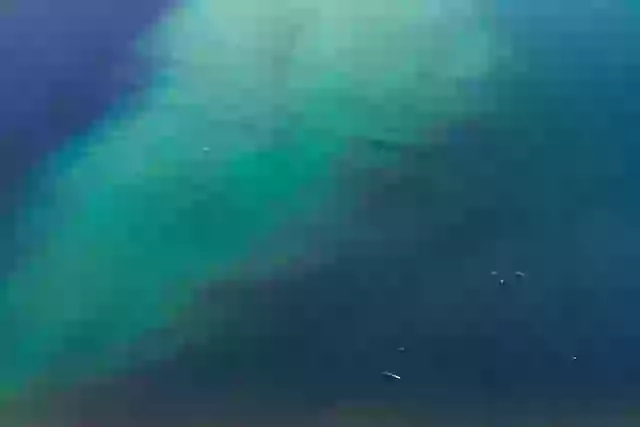
Seen from a plane, this phenomenon unfolds over the Pacific near Kanagawa, Japan.
And it’s not just microscopic creatures that benefit from these blooms. In areas like the Bonney Coast, which borders part of the bloom zone, phytoplankton abundance draws in some of the ocean’s most prominent residents.
Marine biologists estimate that up to 80 blue whales visit the area yearly to feed on krill and other small creatures that thrive in these nutrient-packed waters. Sardines, tuna, anchovies, crabs, and countless other species also rely on this yearly bloom.
NASA Ocean described the area as turbulent but vital. In a Facebook post earlier this year, they wrote:
“Phytoplankton bloom in the waters between the southeastern coast of Australia and Tasmania, named Bass Strait. The region is known for its turbulent waters and harbors numerous shipwrecks. The strait provides the most direct waterway between the Great Australian Bight and the Tasman Sea, and is also the only maritime route into the economically prominent Port Phillip Bay.”
 Getty Images
Then the bluer patch shows up in the images, and suddenly the bloom is not as straightforward as it looks.
It’s the same kind of “almost alien” deep-sea shock as the strange glowing bodies and forms found far below the surface.
While the water turns colorful under the satellite, the same nutrient surge is setting off a chain reaction that keeps krill thriving for weeks.
Our oceans are full of mind-blowing surprises. Using satellite imagery, scientists have spotted bursts of bioluminescent life lighting up the waves, turning vast stretches of water into living light shows.
It’s vivid proof that you don’t have to look past the edge of our atmosphere to witness nature’s wonders. Sometimes the most spectacular discoveries lie right under our noses, hundreds of miles below and miles above, all at once.
And when NASA described the area as turbulent but vital, you can almost see why up to 80 blue whales might keep circling back to the Bonney Coast edge.</p>
The revelation of a glowing phenomenon in the ocean highlights the critical role that bioluminescent and fluorescent organisms play in marine ecosystems. This extraordinary sight, visible from space, serves as a reminder of the delicate balance of life beneath the waves. Protecting these luminous creatures and their habitats is essential for preserving biodiversity and ensuring the ecological health of our oceans.
As scientists continue to explore the depths of the ocean, it is vital that future research prioritizes sustainable practices that not only protect these environments but also explore the potential applications of these glowing organisms in scientific and technological advancements. The insights gained from studying these remarkable beings can illuminate the path toward a more harmonious relationship between humanity and nature, revealing that our oceans are not only reservoirs of life but also sources of inspiration for a more sustainable future.
The ocean didn’t just glow for the cameras, it lit up an entire food web.
Want more “seen from above” weirdness, check out the Lost City’s massive monoliths rising over 200 feet from the ocean floor.
