
This Is The Only Animal That May Survive The End Of Civilization
It's definitely not your typical house pet.


It sounds like a sci-fi punchline, but the “end of civilization” scenario has a tiny loophole: tardigrades. These microscopic water bears look harmless, yet they’re basically built for the kind of chaos that wipes out everything else.
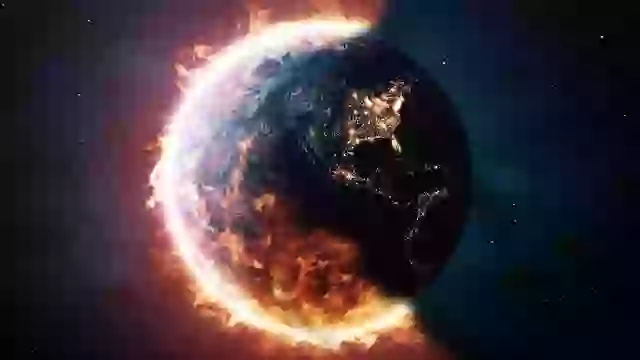
Picture Earth getting hit with a gamma-ray burst, a supernova’s fallout, or an asteroid strike, the kind of event that would turn human life into a footnote. Humans would scramble, dig deeper, and ration what they can, while tardigrades could just curl into their dry husks and hit pause, expelling almost all their water and shutting metabolism down until it’s safe again.
So while people plan for survival, these weird little survivors might be planning for a comeback.
Tardigrades might look cute, but scientists say they could outlive the end of the world.
Tardigrades can survive being frozen in liquid nitrogen, boiling in hot springs, and even enduring extreme levels of radiation that would kill most other life forms. How?
They slip into a state called cryptobiosis, which is kind of like a reversible shutdown. During cryptobiosis, a tardigrade expels over 95 percent of the water from its body, curls into a dry husk, and effectively pauses its metabolism.
In this state, it can tolerate temperatures from -460°F up to 302°F, pressures higher than those found at the bottom of the ocean, and doses of radiation thousands of times higher than a human could handle.
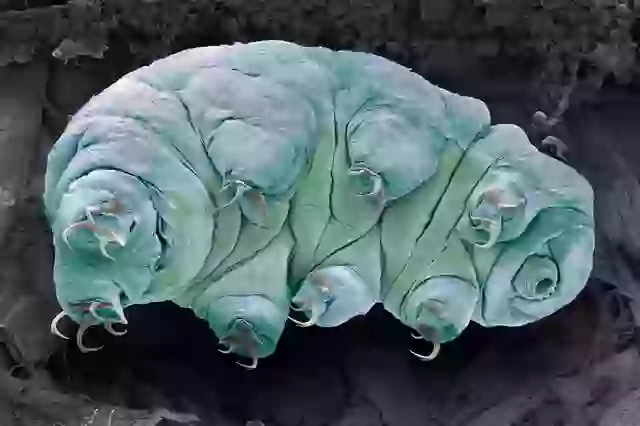 Getty Stock Photo
The scary part is that the same conditions that would wreck people, nearby supernovae and giant impacts, barely faze those cryptobiotic husks.
“To our surprise, we found that although nearby supernovae or large asteroid impacts would be catastrophic for people, tardigrades could be unaffected. Therefore, it seems that life, once it gets going, is hard to wipe out entirely. Huge numbers of species, or even entire genera, may become extinct, but life as a whole will go on.”
In practical terms, if some planet-shattering event came along—a gamma-ray burst that blasted Earth with deadly ultraviolet radiation—our little water bears would be tucked away in their cryptobiotic shells, entirely unfazed. They'd rehydrate once conditions returned to normal, spring back to life, and continue.
And it gets even wilder when you realize they can handle everything from liquid-nitrogen freezing to boiling hot springs without “dying,” just waiting it out.
Survival Mechanisms in Nature
Tardigrades can survive extreme temperatures, radiation, and even the vacuum of space, showcasing nature’s resilience.
Their ability to enter a cryptobiotic state, effectively suspending their metabolism, is a key survival mechanism. This adaptation allows them to endure conditions that would be lethal for most life forms, illustrating the remarkable diversity and adaptability of life on Earth.
Just like the massive underwater columns and monoliths in the alleged Atlantic “lost city”, tardigrades could outlast everything we know.
People often talk about the end of the world.
It’s hard to overstate how remarkable this is. Humans build underground bunkers, stockpile food, and try to engineer our way out of disasters.
But against the raw power of astrophysical phenomena, we’re completely outmatched. The tardigrade’s secret is evolutionary simplicity. Rather than investing energy in a big nervous system or complex organs, it can shut down almost entirely and wait out the worst.
 Getty Stock Photo
That’s why the article’s gamma-ray burst example lands so hard, humans would be scrambling for air and shelter while tardigrades are tucked away recharging in silence.
Of course, being microscopic has its risks—storms, predators, and dehydration can still kill a tardigrade. But on the cosmic scale, those are minor compared to having a supernova explode within a few dozen light-years or an asteroid the size of a city barreling toward you.
So next time you see a meme about cockroaches inheriting the Earth, remember there’s an even tougher survivor out there. The unassuming tardigrade is the heavyweight champion in the great contest of who might claim the planet after an apocalypse. And that tiny, eight-legged critter might be the last living thing standing once the lights go out on our world.
Even the “life goes on” idea feels less abstract here, because if these tiny animals bounce back, extinction might be the headline, not the final period.
Studying these organisms provides insights into how life can thrive under adverse conditions.
Examining the survival strategies of resilient species captivates our imagination and provides essential insights for addressing future challenges.
The world can burn, but the water bears might still wake up.
Still think humans run the timeline? See how the unexpected “future-earth overlord” could replace us.
